Consolidated Books Website

Category : Reports

Theoretical Perspectives Guiding QOL Indicator Projects

Most of the theoretically based QOL indicators projects can be classified in terms of six major theoretical concepts: (a) socio-economic development (b) personal utility, (c) just society, (d) human development, (e) sustainability, and (f) functioning. I explain the core aspects of these six theoretical paradigms and show how they help guide QOL researchers to select and develop QOL indicators that are significantly and qualitatively distinct. A taxonomy of QOL indicators guided by a given theoretical concept is likely to be very different from others taxonomies guided by different theoretical concepts. Thus, the objective of this paper to explain these theoretical paradigms and show how they guide QOL researchers to select and develop QOL indicators that are significantly and qualitatively distinct.
Posted in Reports

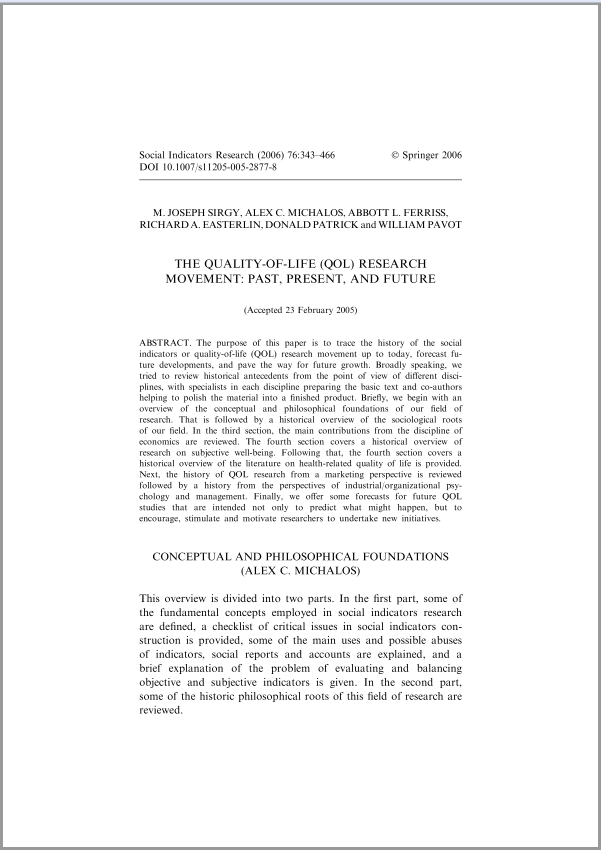
The Quality-of-Life (QOL) Research Movement: Past, Present, and Future

The purpose of this paper is to trace the history of the social indicators or quality-of-life (QOL) research movement up to today, forecast future developments, and pave the way for future growth. Broadly speaking, we tried to review historical antecedents from the point of view of different disciplines, with specialists in each discipline preparing the basic text and co-authors helping to polish the material into a finished product. Briefly, we begin with an overview of the conceptual and philosophical foundations of our field of research. That is followed by a historical overview of the sociological roots of our field. In the third section, the main contributions from the discipline of economics are reviewed. The fourth section covers a historical overview of research on subjective well-being. Following that, the fourth section covers a historical overview of the literature on health-related quality of life is provided. Next, the history of QOL research from a marketing perspective is reviewed followed by a history from the perspectives of industrial/organizational psychology and management. Finally, we offer some forecasts for future QOL studies that are intended not only to predict what might happen, but to encourage, stimulate and motivate researchers to undertake new initiatives.
Posted in Reports

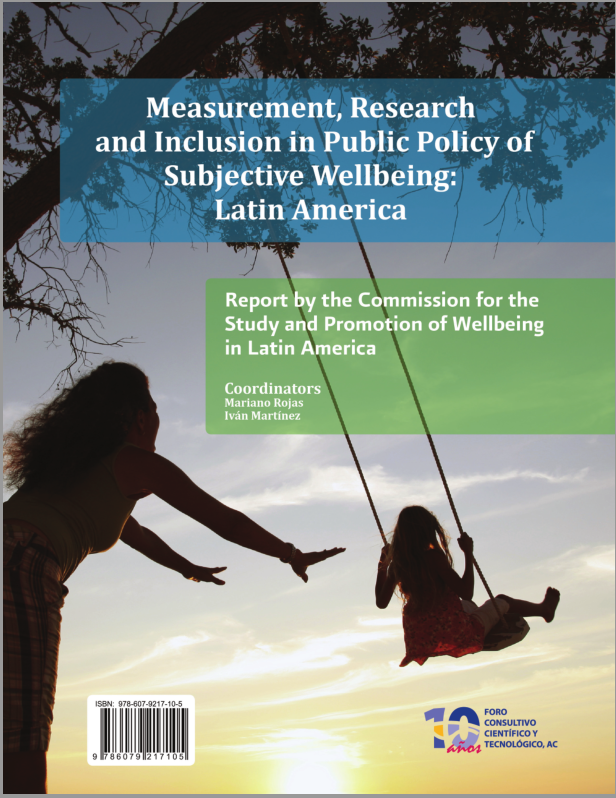
Measurement, Research, and Inclusion in Public Policy of Subjective Wellbeing: Latin America

Since approximately four decades ago, after diverse branches of knowledge such as psychology and sociology emerged, subjective wellbeing has been an object of study. However, it until recent years that researches related to this topic have had a global boom because they contribute to measure the perceptions of people regarding their situation and the environment where they are developing.

Mariano Rojas and Iván Martínez, coordinators of the book Medición, Investigación, e Incorporación a la Política Pública del Bienestar Subjetivo: América Latina, published by the Scientific and Technological Consultative Forum (FCCyT), are presenting a report elaborated by the Commission for the Study and Promotion of Wellbeing in Latin America about the best practices for subjective wellbeing research, the most common subjects, and a group of suggestions about how to incorporate this topic to public policies.

Posted in Reports

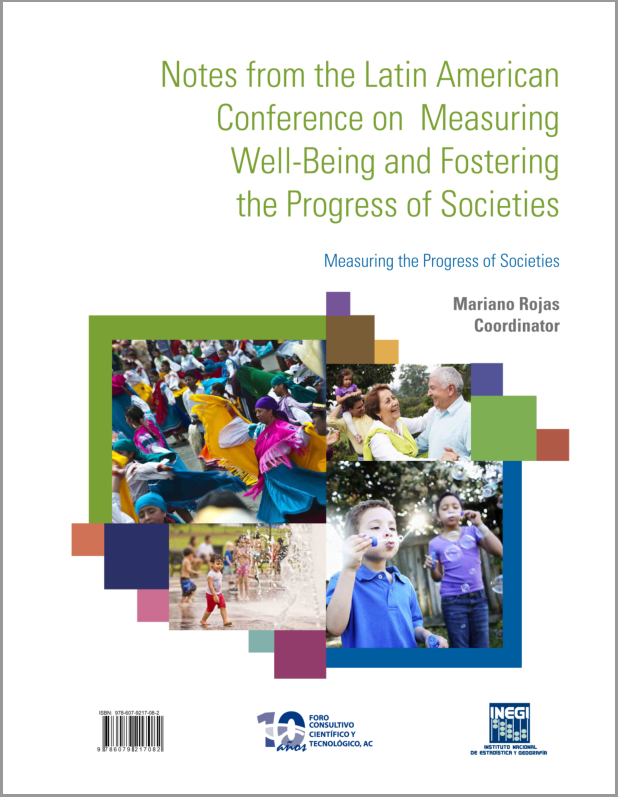
Measuring the Progress of Societies

The Latin American Conference on Measuring Well-Being and Fostering the Progress of Societies was held at the Palacio de Minería in Mexico City from May 11th to 13th, 2011. This event is the first in a series of regional conferences to be conducted within the Global Project on Measuring the Progress of Societies before the 4th World Forum to be held in New Delhi in October 2012.
Posted in Reports

Measuring the progress of societies

For centuries, the idea of progress has accompanied human activity and thinking. Great social thinkers have occupied their energies in the deliberation of what determines progress, as well as on the contemplation of what a society in which progress is present might look like. Scientists have occupied themselves with the task of advancing knowledge and technicians with the task of implementing it in order to generate progress. The idea that the progress of societies is the main social objective lies in political discourse and justifies the actions of policy makers and international organizations.
Posted in Reports

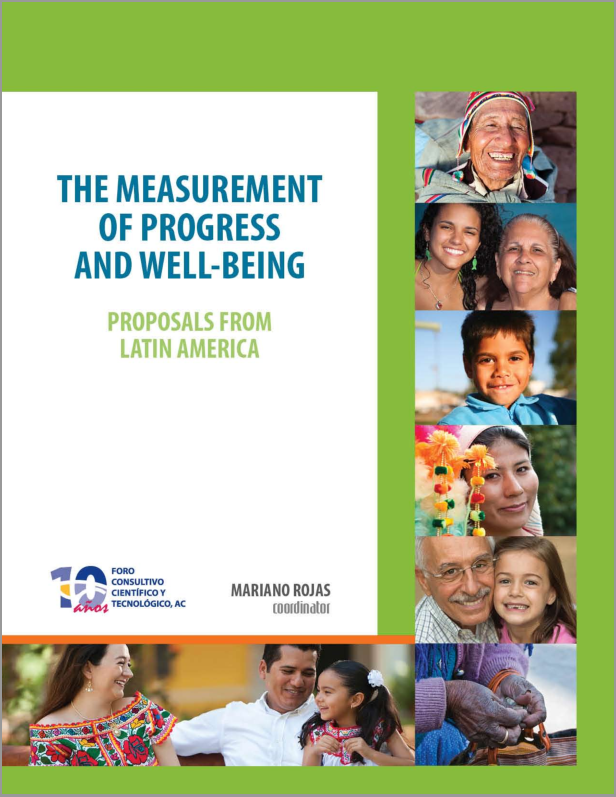
The Measurement of Progress and Well-Being

The Law of Science and Technology, published in June, 2002, proposed some important modifications to the legislation on this matter, such as: the creation of the General Council of Scientific Research and Technological Development, the identification of the National Council of Science and Technology (CONACYT) as head of the science and technology sector, and the creation of the Scientific and Technological Consultative Forum (FCCyT).
Posted in Reports

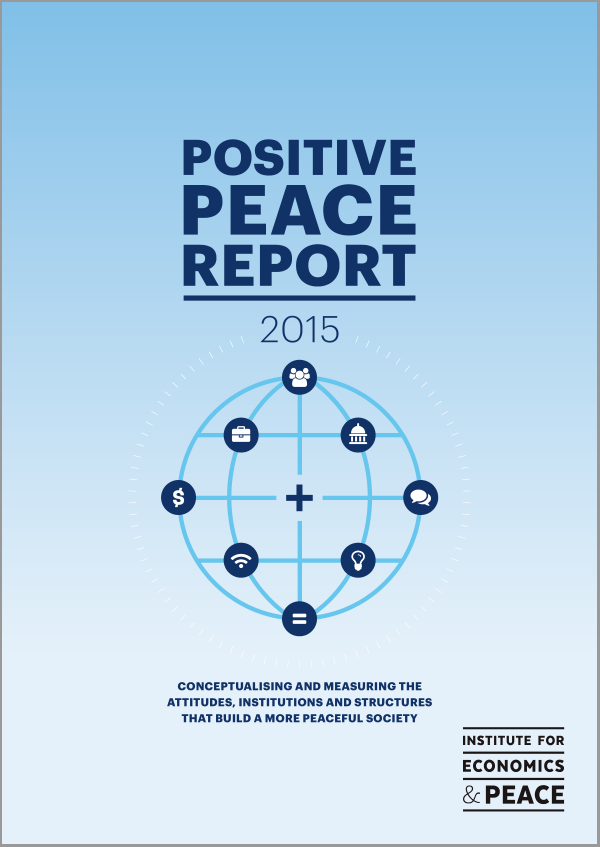
Positive Peace Report 2015

Humanity is now facing challenges unparalleled in its history. The most urgent challenges are global in nature, such as climate change, ever decreasing biodiversity, increasing migration and over-population. These global challenges call for global solutions and these solutions require cooperation on a scale unprecedented in human history. In a globalised world, the sources of many of these challenges are multidimensional, increasingly complex and span national borders. For this reason, finding solutions to these unprecedented challenges fundamentally requires new thinking.
Posted in Reports

How’s Life? Measuring Well-Being

This report is published under the responsibility of the Secretary General of the OECD. The opinions expressed and arguments employed herein do not necessarily reflect the official views of the Organisation or of the governments of its member countries.

The report was prepared by the Well-Being Unit of the OECD Directorate of Statistics: Carlotta Balestra (chapters 10 and 11), Romina Boarini (chapters 1 and 7), Michael de Looper and Gaetan Lafortune (chapter 5), Fabiola Riccardini (chapter 3), Nicolas Ruiz (chapter 2), Katherine Scrivens (chapters 6 and 8), Conal Smith (chapter 12), Joyce Sultan (chapters 4 and 9), under the supervision of Romina Boarini, Marco Mira d’Ercole and Martine Durand. Statistical assistance was provided by Elena Tosetto. Editorial assistance was provided by Germán Morales, Susannah Nash, Ingrid Herrbach and Sonia Primot. The report has benefited from contributions and comments from staff of other OECD Directorates and from national delegates to the OECD Committee on Statistics.

Posted in Reports

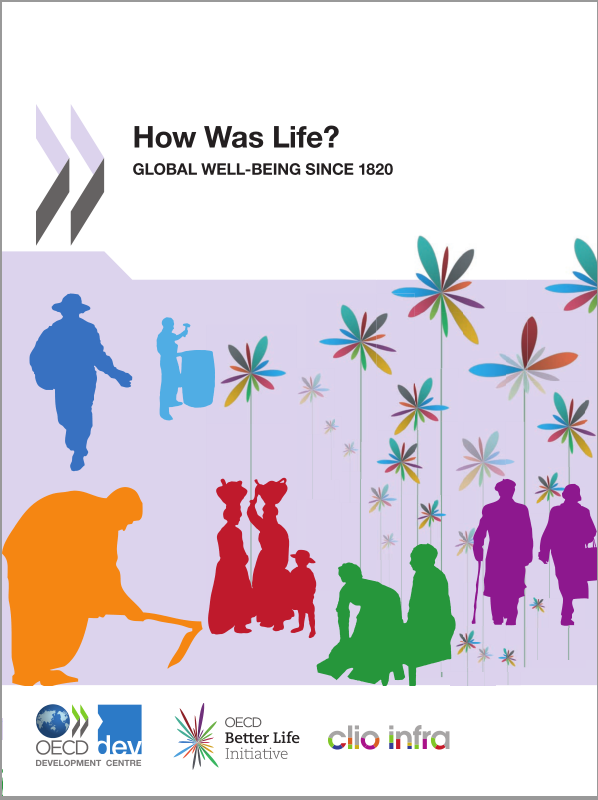
How Was Life? Global Well-Being since 1820

I n 2001, the OECD Development Centre released Angus Maddison’s book, The World economy – a Millennial Perspective, which was soon to become a classic in economic history for statisticians, economists and historians. Angus had a very long association with the Organisation for Economic Cooperation and Development (OECD), which he joined in 1953, and was one of the founding fathers of its Development Centre. This enthusiastic and thought-provoking “chiffrephile” – as he used to call himself – devoted much of his career to quantifying and analysing long-term growth in output as well as achievements in development and social welfare over the past millennium in as many countries of the world as possible. In doing this, he greatly contributed to one of the core missions of the OECD: providing the evidence for policy-making.
Posted in Reports

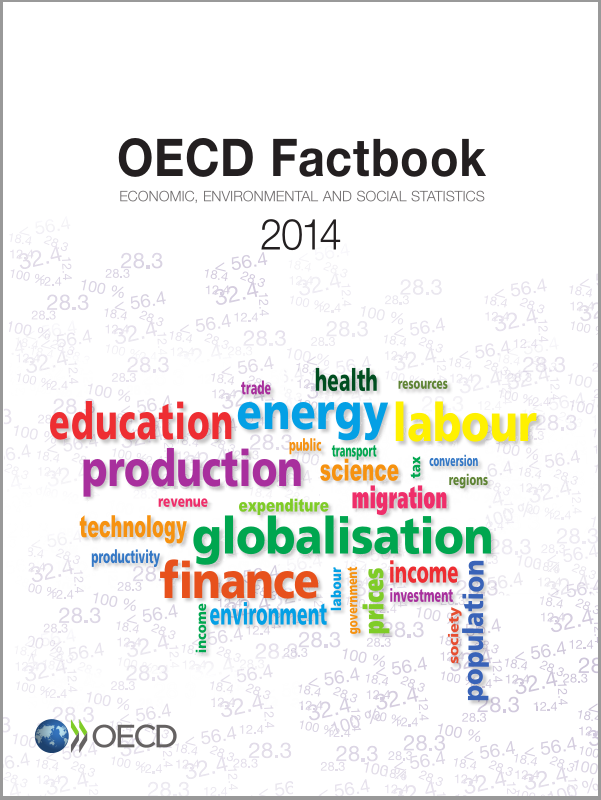
OECD Factbook 2014

The OECD Factbook is the most comprehensive OECD publication on statistics. The Factbook contains a wide set of internationally comparable indicators that allows users to assess and compare countries’ performance over time in a wide range of areas that are at the heart of citizens’ and policy-makers’ concerns.

Written in a non-technical language, the OECD Factbook provides more than 100 indicators for all 34 OECD member countries and, when available and considered internationally comparable, for Brazil, India, Indonesia, the People’s Republic of China, the Russian Federation and South Africa.

Data presented in the OECD Factbook are also available online through OECD.StatExtracts, the OECD platform for data dissemination, and as of June 2014 the new OECD data portal. The OECD Factbook, in its various formats, thus represents a first-stop, easy tool for all those who are looking for reliable, trustworthy and internationally comparable statistics.

Posted in Reports