Consolidated Books Website

Category : Supplemental Material

The World Economy: the Third Great Wave

The first two industrial revolutions inflicted plenty of pain but ultimately benefited everyone. The digital one may prove far more divisive, argues Ryan Avent.
Posted in Reports

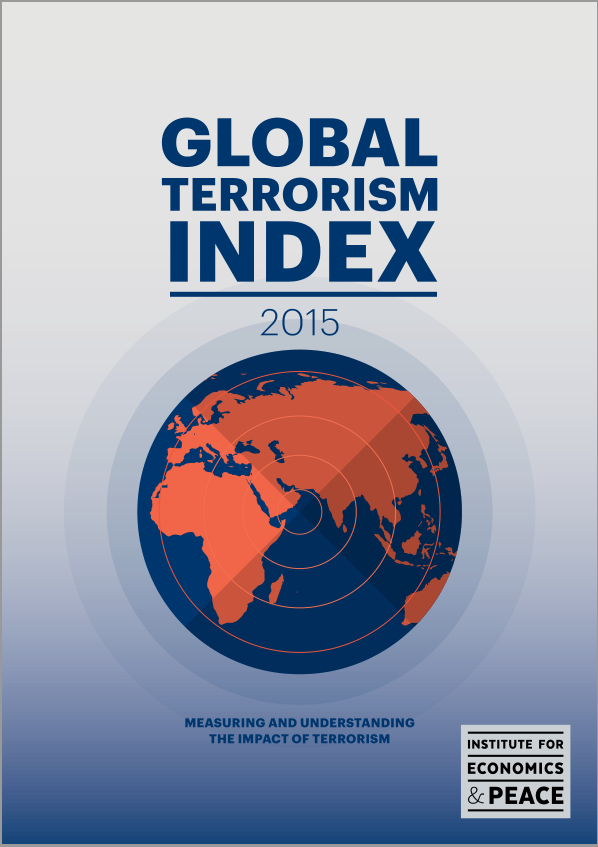
2015 Global Terrorism Index

This is the third edition of the Global Terrorism Index, which provides a comprehensive summary of the key global trends and patterns in terrorism over the last 15 years with a special emphasis on 2014.

Produced by the Institute for Economics and Peace, the GTI is based on data from the Global Terrorism Database (GTD) which is collected and collated by the National Consortium for the Study of Terrorism and Responses to Terrorism. The GTD is considered to be the most comprehensive dataset on terrorist activity globally and has codified over 140,000 terrorist incidents.
Posted in Reports

Report by the Commission on the Measurement of Economic Performance and Social Progress

In February 2008, the President of the French Republic, Nicholas Sarkozy, unsatisfied with the present state of statistical information about the economy and the society, asked, Joseph Stiglitz (President of the Commission), Amartya Sen (Advisor) and Jean Paul Fitoussi (Coordinator) to create a Commission, subsequently called “The Commission on the Measurement of Economic Performance and Social Progress” (CMEPSP). The Commission’s aim has been to identify the limits of GDP as an indicator of economic performance and social progress, including the problems with its measurement; to consider what additional information might be required for the production of more relevant indicators of social progress; to assess the feasibility of alternative measurement tools, and to discuss how to present the statistical information in an appropriate way.
Posted in Reports

National Accounts of Well-being

National Accounts of Well-being presents a radical, robust proposal to guide the direction of modern societies and the lives of people who live in them. It demonstrates why national governments should directly measure people’s subjective well-being: their experiences, feelings and perceptions of how their lives are going. It calls for these measures to be collected on a regular, systematic basis and published as National Accounts of Well-being. The measures are needed because the economic indicators which governments currently rely on tell us little about the relative success or failure of countries in supporting a good life for their citizens.
Posted in Reports

Handbook on Constructing Composite Indicators

Composite indicators (CIs) which compare country performance are increasingly recognised as a useful tool in policy analysis and public communication. The number of CIs in existence around the world is growing year after year (for a recent review see Bandura, 2006, which cites more than 160 composite indicators). Such composite indicators provide simple comparisons of countries that can be used to illustrate complex and sometimes elusive issues in wide-ranging fields, e.g., environment, economy, society or technological development.

It often seems easier for the general public to interpret composite indicators than to identify common trends across many separate indicators, and they have also proven useful in benchmarking country performance (Saltelli, 2007). However, composite indicators can send misleading policy messages if they are poorly constructed or misinterpreted. Their “big picture” results may invite users (especially policy-makers) to draw simplistic analytical or policy conclusions. In fact, composite indicators must be seen as a means of initiating discussion and stimulating public interest. Their relevance should be gauged with respect to constituencies affected by the composite index.
Posted in Reports

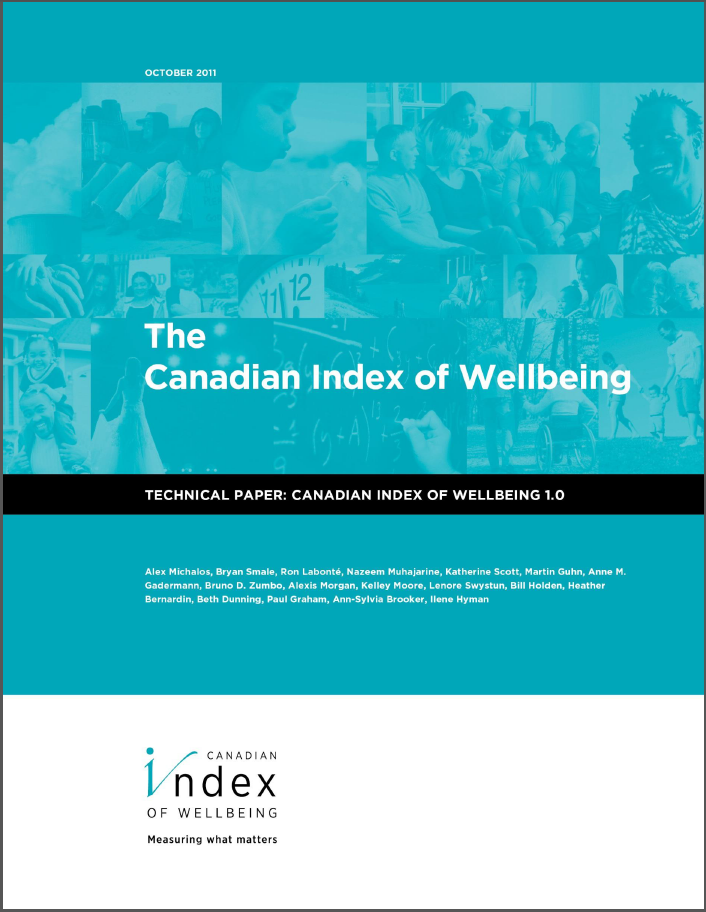
The Canadian Index of Wellbeing

The aim of this paper is to describe an approach to the construction of a single composite index worthy of the name “Canadian Index of Wellbeing” (CIW) based on a selection of headline indicators. Imagine, if you can, a single tree capable of capturing some of the magnificence of a Canadian forest and you will be able to appreciate the challenge before us. Technically speaking, it is a task of constructing a unidimensional index to reasonably represent a multidimensional construct of human wellbeing. The paper provides some background material reviewing assumptions made and principles agreed upon by the Canadian Research Advisory Group (CRAG), formerly the CIW National Working Group, in general and the authors of this piece of work in particular.
Posted in Reports

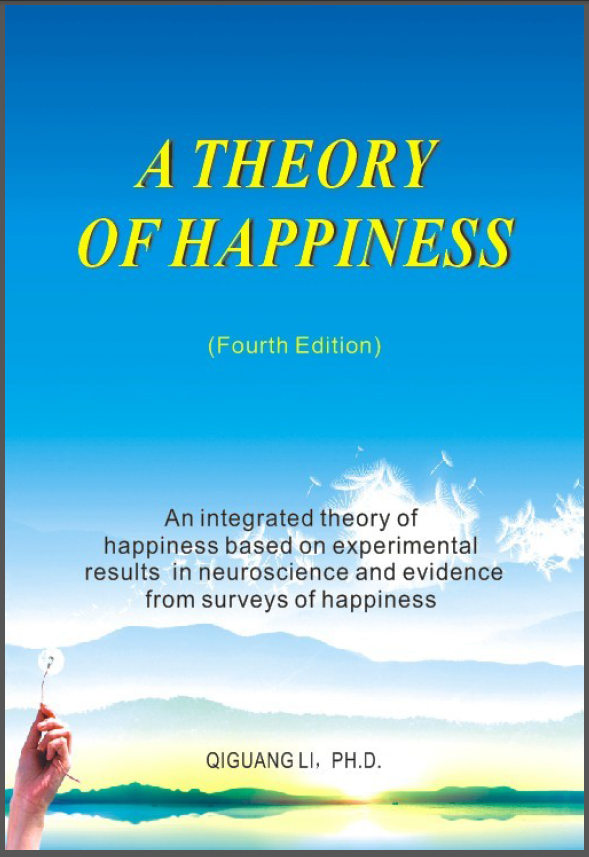
A Theory of Happiness

This books incorporates key elements from major existing theories of happiness. It describes the concepts of pleasure, pleasure intensity, and happiness from the scientific view. The book describes the new concept of the brain physiological state, which constructs a bridge between the brain physiological quantity and psychological magnitude.
Posted in Reports

Don’t Panic: The Truth About Population

In this video / article Hans Rosling blows up some misconceptions and misunderstandings about population growth. He convincingly makes the following points: 1) Population growth should hit a limit around 11 billion within the next hundred years, as the world equalizes in health outcomes. 2) In developed countries, a ratio near 2 parents to 2 children mostly exists. As a result of equalizing health outcomes, low child mortality, and family planning, family sizes go down, and population growth slows in a predictable way. 3) Current population trends are strong enough that by 2100, only ~10% of the world population will be in Western nations (North America, Western Europe) — Africa will quadruple in population and Asia will increase about 25%. Learn more at Farnam Street.

Posted in Videos

Under Construction

This section of the website will contain charts and figures produced for the book and website. Currently we are in the process of deciding how to populate this section, so please check back later if you are interested.

Posted in Charts and Figures

Baseline Indicators

The supplemental tables with our baseline indicators have been added to the website here. Please take a look if you are interested.

Posted in Supplemental Material